The recovery phase after a tummy tuck (abdominoplasty) is a period of healing and transformation. If you’re considering or have recently undergone this procedure, understanding potential complications can help you prepare for a smoother recovery. One of the most common post-surgical concerns patients face is seroma formation: a treatable condition that affects 1% to 38% patients after abdominal procedures.
Let’s walk through everything you need to know about seromas after a tummy tuck, from prevention to treatment. This will help you recognize the signs and take appropriate action.
Key Points
- Seromas are pockets of clear fluid that collect under the skin after tummy tuck surgery.
- Key signs include localized swelling, a fluid-filled bulge, a sloshing sensation, or clear drainage from the incision site.
- Prevention includes wearing compression garments as prescribed, limiting activity, and keeping drains in place until removal is recommended.
- Treatment ranges from observation for small seromas to needle aspiration for larger or persistent seromas.
What Is a Seroma?
A seroma is a pocket of clear fluid (serous) that builds up under the skin after surgery. It usually forms in areas where the surgeon separated tissue and created space during the procedure. While they’re generally not dangerous, they can be uncomfortable and may slow your healing process if left untreated.
According to the American Society of Plastic Surgeons, seromas are one of the most frequent complications following abdominoplasty. Modern surgical techniques are designed to reduce their occurrence.
Why Do Seromas Form After Tummy Tuck Surgery?
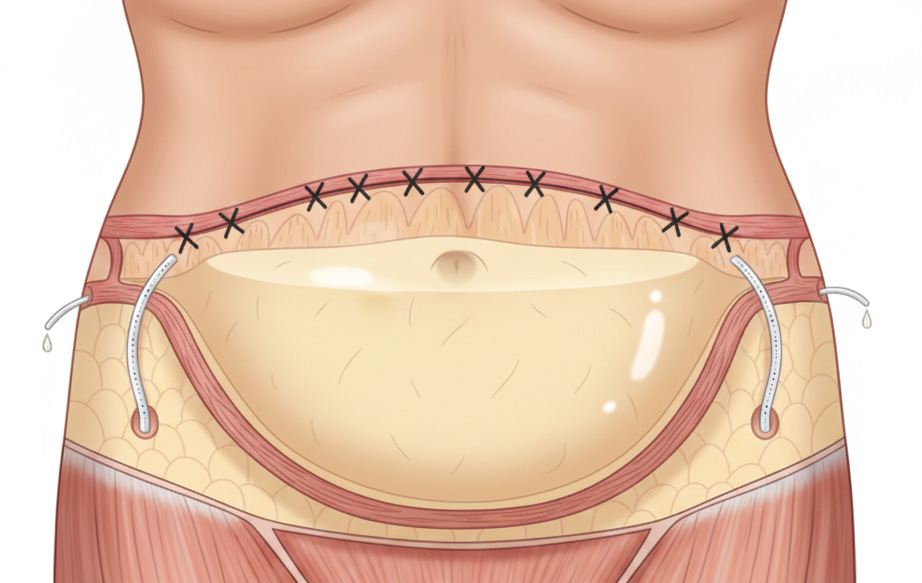
Seromas form because a tummy tuck creates a space under the skin and temporarily disrupts normal fluid drainage. As the body heals, fluid can collect in this space instead of draining away, leading to a seroma.
Several factors can increase your risk of developing a seroma:
- Extent of surgery: More extensive procedures with larger tissue removal can leave more space under the skin where fluid can collect.
- Surgical technique: The way tissue is lifted, tightened, and secured can affect how much dead space remains, which can influence seroma risk.
- Patient factors: A higher BMI, smoking, and certain medical conditions can slow healing and increase the risk of fluid buildup.
- Post-operative activity: Too much movement or strain too early after the surgery can interfere with healing and increase the possibility of fluid collection.
- Drain removal timing: If surgical drains are removed prematurely (before fluid output has decreased enough), the remaining fluid can collect under the skin and lead to seromas.
What Are the Signs of a Seroma?
Patients describe seromas in different ways, but common signs include:
- Visible swelling or a fluid-filled bulge under your incision
- Clear fluid is leaking from your incision site
- Feeling of heaviness or fullness in the surgical area
- Skin that feels tight or appears stretched
- A sloshing sensation when you press gently on the area (called “fluctuance” in medical terms)
Most seromas develop within the first two weeks after surgery, though they can occasionally appear later.
When to Call Your Surgeon Immediately
Contact your plastic surgeon right away if you experience:
- Redness, warmth, or increasing pain (signs of possible infection)
- Fever
- Foul-smelling drainage
- Rapid swelling
- Separation of your incision
These symptoms may indicate infection or another complication that needs evaluation.
Seroma vs Normal Swelling: How to Tell the Difference
Normal swelling after a tummy tuck is usually spread out across the abdomen and slowly decreases over time. A seroma is more likely when swelling feels localized, soft, or fluid-like, and may seem to shift when you move. Because it can be difficult to tell the difference on your own, any new or unusual swelling should be evaluated by your surgical team.
How to Reduce the Risk of Seromas
While it might not be possible to completely eliminate the risk of seromas, you can take steps to reduce it:
Before Surgery
- Quit smoking at least 4-6 weeks before your procedure (nicotine slows healing).
- Maintain a stable, healthy weight.
- Discuss your medications with your surgeon, as some may increase bleeding risk.
After Surgery
- Wear your compression garment exactly as prescribed. This is crucial for preventing fluid accumulation.
- Limit physical activity according to your surgeon’s timeline.
- Attend all follow-up appointments so your surgeon can monitor healing.
- Keep surgical drains in place until your surgeon removes them.
- Stay hydrated, but follow any fluid intake recommendations.
- Sleep with your upper body elevated to reduce swelling.
Your surgeon may also use specialized surgical strategies to minimize seroma risk, such as progressive tension sutures or quilting sutures to eliminate dead space.
How Seromas Are Treated
Seroma treatment depends on its size, symptoms, and how long it has been present. Imaging, such as ultrasound, may be used if the diagnosis is unclear. Common approaches include:
Observation
Some seromas are small and resolve on their own as the body reabsorbs the fluid. So, surgeons may recommend monitoring the area during follow-ups, especially if they’re stable and not causing problems.
Needle aspiration (drainage in clinic)
If the seroma is uncomfortable, enlarging, or persistent, surgeons may remove the fluid using a needle and syringe. It takes a few minutes, but it may require multiple sessions as fluid can re-accumulate.
Ongoing management for recurrent seromas
Some cases require repeat aspiration, longer drain use, or other interventions guided by the surgeon. Seroma management in these situations is individualized and depends on recurrence and complications.
Important: Do not try to drain a seroma at home. This increases infection risk and can worsen outcomes.
FAQs
Are seromas dangerous?
Most seromas are manageable, but they should be monitored because fluid collections can sometimes become infected or persist. We recommend scheduling an evaluation when symptoms worsen or you suspect an infection.
Will a seroma affect my tummy tuck results?
In most cases, a seroma will not affect tummy tuck results. Once the fluid is drained and the pocket closes, your results should look exactly as planned.
Should I massage a seroma?
Do not massage or apply heavy pressure unless your surgeon specifically instructs you. Pressure and manipulation can irritate tissues and may worsen swelling or fluid buildup.
Do compression garments prevent seromas?
Compression garments may help reduce the risk, but not guarantee the prevention of seromas. Prevention depends on many factors, including surgical technique and dead-space control strategies.
Can a seroma come back after drainage?
Yes, some seromas recur and may need repeat aspiration or additional management, depending on the situation.
Get Help With Tummy Tuck Recovery Concerns
If you’re experiencing symptoms of a seroma or have concerns about your tummy tuck recovery, don’t hesitate to reach out. At Northwest Face & Body, our experienced team is here to guide you through every step of your cosmetic surgery journey, from initial consultation through complete recovery. Call us at (425) 472-1046 to book a consultation.