
- What Are Saline Implants?
- What Are Silicone Implants?
- Choosing the Right Breast Implant
- Pros and Cons of Silicone vs. Saline Implants
- Factors to Look at When Choosing Breast Implants
- How Old Do You Need to Be to Get Breast Implants?
- Which Type of Implants Are Best With a Breast Lift?
- Silicone vs. Saline: Which Is Right for You?
- Kirkland Breast Augmentation Before and After
- Understanding Breast Augmentation in Kirkland Recovery
- Implant Longevity and Replacement
- Why Choose Northwest Face & Body for Breast Augmentation in Kirkland?
- Schedule a Breast Augmentation Consultation in Kirkland
- FAQs
Choosing between saline and silicone implants is one of the most important decisions to make before getting breast surgery. Although both options provide strong aesthetic results, each offers different advantages. For patients considering breast augmentation in Kirkland, the right choice of implants mostly depends on body type, lifestyle, age, and personal goals.
At Northwest Face & Body, Dr. Tarak Patel (double board-certified in Plastic Surgery and General Surgery) and Dr. Rajasekhar Nalluri (board-certified by the American Board of Plastic Surgery) bring years of experience with thousands of successful procedures to help each patient select the implant type that fits their anatomy and goals.
This article breaks down the differences, describes the pros and cons, and helps patients make a well-informed decision before moving forward with surgery.
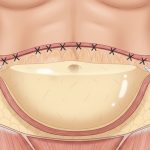
What Are Saline Implants?
Saline implants have a silicone outer shell filled with sterile salt water. The shell is inserted empty and filled once it is in position, which allows for a smaller incision. If a saline implant ruptures, the body safely absorbs the saline solution, and the deflation is immediately visible.
Saline implants are FDA-approved for women aged 18 and older for cosmetic breast augmentation. According to the U.S. Food and Drug Administration, saline implants have been used safely for decades and remain a popular option for patients seeking breast augmentation with minimal post-surgical monitoring.
What Are Silicone Implants?
Silicone implants consist of a silicone outer shell filled with silicone gel. The gel closely mimics the feel of natural breast tissue. Because silicone implants are pre-filled, a slightly larger incision is required than with saline implants.
The FDA approved silicone implants for cosmetic use in 2006 after extensive safety testing. Modern silicone implants use cohesive gel technology, meaning the gel holds its shape even if the shell is compromised. Patients who choose silicone implants should plan for routine imaging to monitor implant integrity over time.
Choosing the Right Breast Implant
Implant selection is a surgical decision with aesthetic, structural, and long-term consequences. The central question is not “Which implant is best?” but rather “Which implant is best for my anatomy, my goals, and how my surgeon plans the procedure?”
Many patients arrive at their consultation with research gathered from social media, friends, or Internet forums. That background knowledge is useful, but it should be reviewed alongside a qualified surgeon who can assess individual anatomy and surgical goals. Dr. Patel and Dr. Nalluri assess the chest wall dimensions, skin elasticity, and each patient’s desired outcome before recommending the most appropriate implant type.
Pros and Cons of Silicone vs. Saline Implants
Advantages of Saline Implants:
- A smaller incision is required for insertion
- Rupture is immediately noticeable through visible deflation.
- No special post-surgical imaging required
- Lower upfront cost
- FDA-approved for ages 18 and older
Disadvantages of Saline Implants:
- Can feel less natural than silicone, particularly in thin patients
- Higher risk of rippling or wrinkling under the skin
- May produce a faint sloshing sound in some cases
- Deflation requires replacement surgery.
Advantages of Silicone Implants:
- Closely mimics the feel and movement of natural breast tissue.
- Lower risk of visible rippling
- Maintains shape even if the shell is compromised
- Preferred by many surgeons for a natural-looking result
- Generally longer-lasting in most cases.
Disadvantages of Silicone implants
- Requires a larger incision for insertion
- Frequent monitoring using MRI or ultrasound is required
- Higher initial cost
- FDA-approved only for ages 22 and older
- Rupture may go undetected without imaging.
Factors to Look at When Choosing Breast Implants
There are multiple factors to choose before choosing implants for Kirkland breast augmentation. Some of them are:
Body Type and Anatomy: Thin patients with minimal natural breast tissue are the ones that generally benefit more from silicone implants. This is because saline implants carry a higher risk of visible rippling. Patients with more natural breast tissue can do well with either option.
Desired Aesthetic Outcome: Patients who are looking for a natural feel and appearance often prefer silicone implants. Those who want a more defined, rounded shape may choose either type depending on implant profile: low, moderate, or high projection.
Implant Brands and Technology: Silicone implants are available from several FDA-cleared manufacturers, each providing different shell textures (smooth or textured) and gel cohesiveness levels. For patients, selecting a Brand does matter, but only within the context of how the surgeon plans the procedure and what best suits the anatomy of the patient.
Lifestyle Considerations: Patients who participate in sports or high-impact activities should discuss implant durability with their surgeon. Both types are durable, but rupture risk can vary based on activity level and implant quality.
Budget: Saline implants typically cost less than silicone. That said, cost should not be the primary deciding factor when considering long-term results and overall satisfaction.
How Old Do You Need to Be to Get Breast Implants?
The FDA sets age requirements based on implant type:
- Saline implants: Approved for cosmetic breast augmentation in women aged 18 and older
- Silicone implants: Approved for cosmetic breast augmentation in women aged 22 and older
These age requirements exist because breast development continues into the early twenties. Younger patients should wait until they reach the minimum age and have fully developed breasts before proceeding with augmentation.
Which Type of Implants Are Best With a Breast Lift?
When combining Kirkland breast augmentation with a breast lift, silicone implants are often the preferred choice. The combination procedure addresses both volume loss and skin laxity. Silicone implants provide better support and a more natural appearance alongside lift incisions.
Saline implants can also work in combination with a breast lift in certain cases. The decision depends on individual anatomy, skin quality, and the surgeon’s recommendation. Patients considering this combination should discuss both options with their surgeon during a breast augmentation before and after consultation.
Silicone vs. Saline: Which Is Right for You?
The answer depends on balancing several priorities.
Choose saline if you:
- Prefer a smaller incision
- Want a lower upfront cost
- Prefer to avoid post-surgical monitoring imaging
- Are 18 years old or older
- Have adequate natural breast tissue
Choose silicone, if you:
- Value natural feel and appearance
- Have thin skin or minimal natural breast tissue.
- Are 22 years old or older
- Want to reduce the risk of visible rippling?
- Are comfortable with periodic imaging
The best implant is the one that fits a patient’s anatomy, goals, and lifestyle. At Northwest Face & Body, Dr. Patel and Dr. Nalluri take time during Kirkland breast augmentation consultation to understand what matters most and make a recommendation based on those specific needs.
Kirkland Breast Augmentation Before and After
Real patient results speak louder than words. The images below show actual breast augmentation in Kirkland results performed at Northwest Face & Body, giving patients a realistic view of what skilled surgical care can achieve.
BEFORE & AFTER IMAGE BLOCK
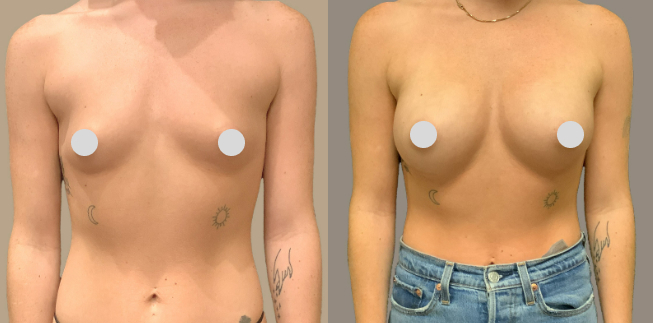
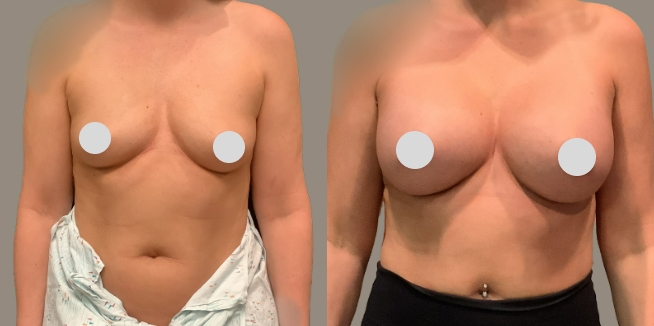
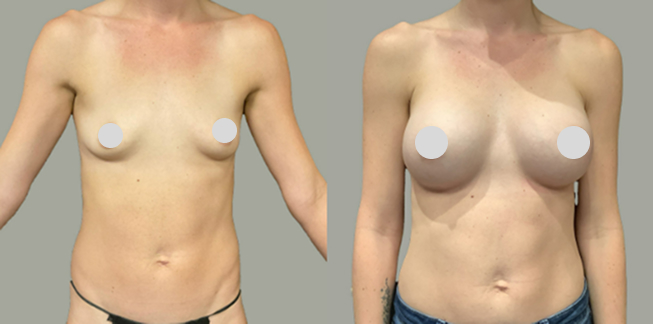
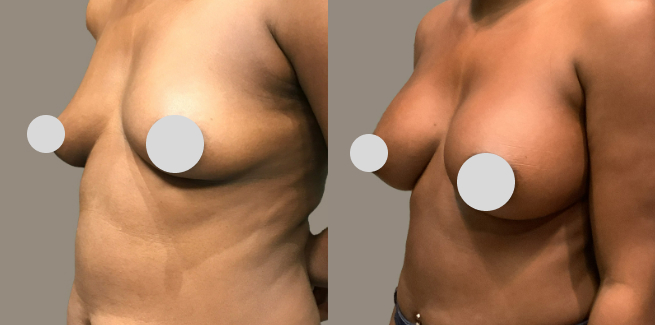
Results vary based on implant type, size, placement, and individual anatomy. During a consultation, Dr. Patel and Dr. Nalluri walk patients through comparable before and after cases to help set realistic expectations and guide implant selection.
Understanding Breast Augmentation in Kirkland Recovery
Breast augmentation recovery typically takes four to six weeks for most daily activities and up to three months for full healing. Understanding the recovery timeline helps patients prepare properly.
Weeks 1 to 2: Patients can expect soreness, swelling and bruises. Pain medication and compression garments help to manage discomfort. Most patients can return to light activity such as desk work in this time.
Weeks 3 to 4: Swelling decreases noticeably. Many patients resume light activity such as walking. Heavy lifting and strenuous exercise remain restricted.
Week 6 and beyond: Most patients are cleared for full exercise, including gym workouts and sports. Implants continue to settle over a period of three to six months.
Breast augmentation recovery progresses at a different pace for each patient. Factors that affect healing include implant size, incision placement, and individual healing capacity. Following post-operative instructions from Dr. Patel or Dr. Nalluri supports optimal healing and results.
Implant Longevity and Replacement
Neither saline nor silicone implants are considered lifetime devices. The FDA notes that the life of the implants varies patient to patient, meaning everyone with implants may need additional surgeries, but just don’t know when.
Silicone implants require periodic imaging (MRI or ultrasound) every few years to check for silent ruptures. Saline implant failure is visible immediately through deflation. Both types can be replaced when necessary, and replacement surgery is typically less involved than the original augmentation procedure.
Why Choose Northwest Face & Body for Breast Augmentation in Kirkland?
At Northwest Face & Body, patients are treated by two of the region’s most famous plastic surgeons.
Dr. Tarak Patel is double board-certified in Plastic Surgery and General Surgery. He served in the military which disciplined his work and gained experience of patients who underwent extreme trauma. He performed thousands of surgeries throughout his career. His certification reflects a depth of surgical training that goes beyond the standard requirements in plastic surgery.
Dr. Rajasekhar Nalluri is board-certified by the American Board of Plastic Surgery. He brings more than 23 years of experience with more than 20,000 surgical procedures completed, assuring to provide natural-looking results tailored to each patient’s anatomy. Dr. Nalluri’s approach combines technical precision with a thorough understanding of each patient’s goals.
Together, Dr. Patel and Dr. Nalluri stay current with the latest implant technology and surgical techniques to deliver results that correspond to each patient’s individual goals. Both surgeons are committed to surgical excellence and patient safety at every stage of the care.
Northwest Face & Body provides patients with options to select any of the two surgeons according to their availability. The consultation process at the clinic includes a detailed review of implant options, realistic expectations and personalized recommendations. Patients have the opportunity to view before and after photos of comparable cases and ask questions before making decisions.
Schedule a Breast Augmentation Consultation in Kirkland
Choosing between saline and silicone implants deserves careful thought and qualified guidance. At Northwest Face & Body, Dr. Tarak Patel and Dr. Rajasekhar Nalluri provide personalized consultations to help patients identify the right implant type based on their anatomy and goals.
During a consultation, patients review breast augmentation before and after photos, discuss recovery expectations and learn about the latest implants. Both surgeons are focused on delivering natural looking results that improve confidence and match each patient’s vision. Contact Northwest Face & Body today to schedule a private consultation. Call the Kirkland office or visit the website to book an appointment.
FAQs
How long do breast implants last?
Breast implants are not lifetime devices. The FDA estimates that approximately 20 percent of implants may require replacement within 10 years, though many last 15 to 20 years or longer. Regular monitoring helps detect any issues early.
Can patients switch from saline to silicone implants later?
Yes. Patients can switch implant types during a replacement procedure. Many patients who start with saline choose silicone during replacement for improved feel and a more natural appearance. Dr. Patel and Dr. Nalluri can walk through this option in detail during a consultation.
What is the difference between smooth and textured implants?
A: Smooth implants have a polished surface and move freely within the implant pocket. Textured implants have a rougher surface that encourages tissue adherence and reduces the risk of rotation. Textured implants are often preferred for anatomical (teardrop-shaped) implants, while smooth implants work well with round shapes.
Will breast implants affect the ability to exercise?
A: After proper healing (typically around six weeks), patients can return to all exercise activities, including high-impact sports. Following post-operative restrictions during the initial recovery period supports proper implant settling and reduces the risk of complications.
How much breast augmentation cost in Kirkland?
Costs vary based on implant type, surgeon experience, facility fees, and anesthesia. Saline implants typically cost less than silicone. At Northwest Face & Body, the starting price for breast augmentation with Saline implant starts at $4,999. This is price is not final as the final cost of breast augmentation always depends upon an individual anatomy and goals.