- Why Does Post-Surgical Care Matter So Much?
- How Should You Care for Your Incisions After Surgery?
- How Can You Manage Pain and Swelling?
- What Should You Wear While Recovering?
- When Can You Resume Physical Activity?
- Are There Showering and Bathing Precautions to Follow?
- What Can You Do to Minimize Scarring?
- When Should You Call Your Surgeon?
- How Long Does Full Recovery Take?
- The Bottom Line
Deciding to undergo breast augmentation in Kirkland or breast augmentation in Bellevue is an exciting step toward achieving the look and confidence you’ve always wanted. But what happens after your surgery is just as important as the procedure itself. Proper aftercare directly influences your comfort, healing speed, and final results.
In this guide, we’ll walk through the essential precautions every patient should follow after breast augmentation to support a smooth, healthy recovery.
Why Does Post-Surgical Care Matter So Much?
Breast augmentation is a safe, well-established procedure, but your body still needs time to adjust to the implants and heal properly. Following your surgeon’s instructions reduces the risk of complications such as infection, poor scarring, or implant displacement. The precautions you take in the first six weeks set the foundation for beautiful, long-lasting results.
How Should You Care for Your Incisions After Surgery?
In the early days after surgery, your incisions require gentle, consistent attention.
● Keep your incisions covered and dry for the first 48 hours.
● Change your gauze as directed typically at least once daily until your follow-up appointment.
● Don’t disturb your sutures. Many surgeons use dissolvable stitches placed under the skin that fade naturally over time.
● Avoid lotions, creams, or deodorant near the incision area until your provider approves.
Helpful tip: It’s normal to feel a pinching or pulling sensation as your sutures settle. Mild pinkness or slight warmth around the breast in the first 48 hours is also typical as your body adjusts to the implant.
How Can You Manage Pain and Swelling?
Some discomfort is expected after a breast augmentation in Kirkland . To stay comfortable and support healing:
● Take your prescribed pain medication exactly as directed.
● Complete your full course of antibiotics, even if you feel fine, to prevent infection.
● Use cold compresses as recommended to ease swelling in the first few days.
Swelling is normal in the early weeks and gradually subsides, revealing your final contour over the following months.
What Should You Wear While Recovering?
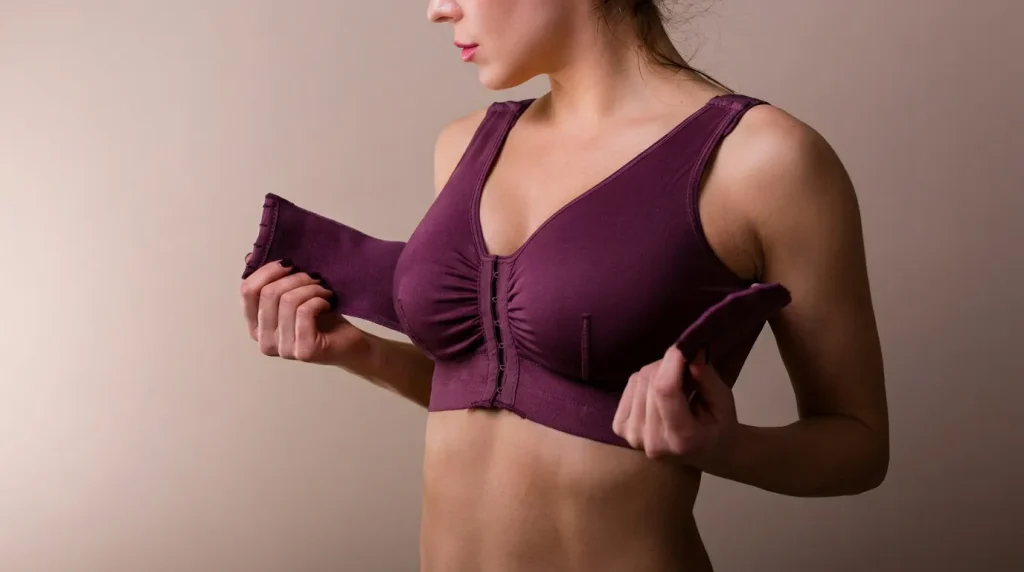
● Wear a soft, supportive bra for up to six weeks — even while sleeping.
● Avoid underwire bras during this period, as they can irritate incisions and interfere with healing.
● Use supportive garments to help maintain implant positioning as your tissues heal.
Key insight: Supportive garments don’t just add comfort — they help keep your implants properly positioned while you heal.
When Can You Resume Physical Activity?
One of the most common questions patients ask is, “When can I get back to normal?” While you can resume light daily activities soon after surgery, certain limits protect your results:
● Avoid chest-tightening exercises (like push-ups) for six weeks.
● Don’t lift anything heavier than five pounds — including children and pets — for four to six weeks.
● Wait for clearance before resuming running, weightlifting, or intense workouts.
● Wear a supportive bra whenever you begin exercising again.
If traveling by car, place a soft pillow between the seatbelt and your chest to protect your healing breasts from pressure.
Are There Showering and Bathing Precautions to Follow?
Yes — water exposure needs to be managed carefully in the early recovery phase.
● Do not shower or get your dressings wet for the first 48 hours.
● Avoid baths, hot tubs, and swimming pools for at least six weeks to reduce infection risk.
● Ask your surgeon about showering if you have a surgical drain in place.
What Can You Do to Minimize Scarring?
Scarring is a natural part of healing, but a few good habits can help it fade:
● Keep incisions out of direct sunlight, which can darken scars.
● Follow any scar care protocol your surgeon recommends, such as silicone-based treatments.
● Avoid picking or scratching at healing incisions.
● Stay hydrated and eat a nutrient-rich diet to support skin repair.
Why this matters: The way you care for your incisions during the first several weeks has a lasting effect on how visible your scars will be long-term.
When Should You Call Your Surgeon?
While most recoveries are smooth, knowing the warning signs matters. Contact your care team right away if you experience:
● A fever of 101°F (38.3°C) or higher
● Increasing redness, warmth, pain, or swelling
● Shaking chills or trouble breathing
● Drainage or oozing from your incisions
Early redness and a mild fever within the first 48 hours can be normal. But if these symptoms worsen or persist after two days, they could signal a complication that needs prompt attention.
How Long Does Full Recovery Take?
Most patients feel comfortable returning to light work within a week, but full recovery is a gradual process. Swelling continues to subside over several weeks, and your implants will “settle” into their natural position over the first few months. Being patient with your body and attending all follow-up appointments — ensures the best possible outcome from your breast augmentation in Bellevue..
The Bottom Line
Following the right precautions after breast augmentation is the key to a smooth recovery and beautiful, natural-looking results. With attentive aftercare, proper rest, and consistent follow-up, you’ll be well on your way to enjoying your new confidence.