
Table of Contents
Key Points
- Seromas are pockets of clear fluid that collect under the skin after tummy tuck surgery.
- Key signs include localized swelling, a fluid-filled bulge, a sloshing sensation, or clear drainage from the incision site.
- Prevention includes wearing compression garments as prescribed, limiting activity, and keeping drains in place until removal is recommended.
- Treatment ranges from observation for small seromas to needle aspiration for larger or persistent seromas.
What Is a Seroma?
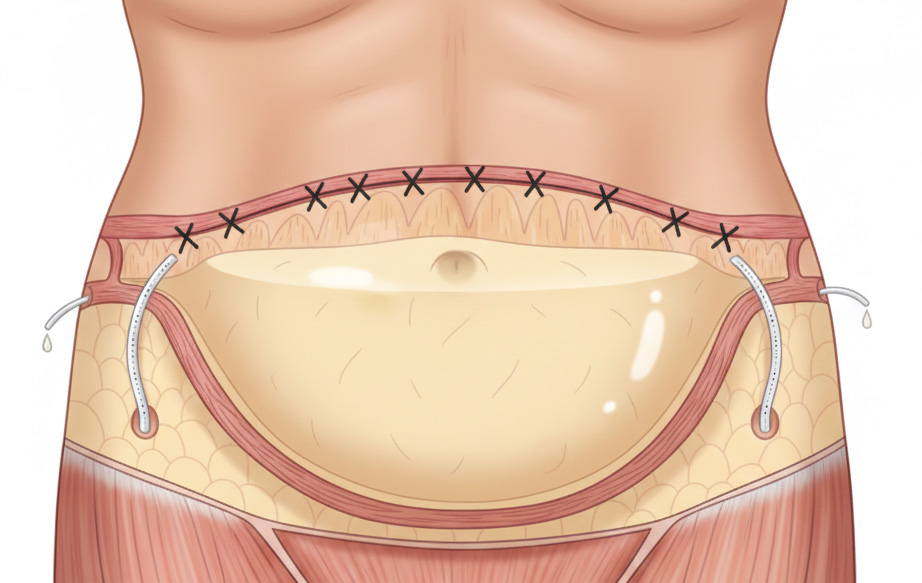
A seroma is a pocket of clear fluid (serous) that builds up under the skin after surgery. It usually forms in areas where the surgeon separated tissue and created space during the procedure. While they’re generally not dangerous, they can be uncomfortable and may slow your healing process if left untreated. According to the American Society of Plastic Surgeons, seromas are one of the most frequent complications following abdominoplasty. Modern surgical techniques are designed to reduce their occurrence.Why Do Seromas Form After Tummy Tuck Surgery?
Seromas form because a tummy tuck creates a space under the skin and temporarily disrupts normal fluid drainage. As the body heals, fluid can collect in this space instead of draining away, leading to a seroma. Several factors can increase your risk of developing a seroma:- Extent of surgery: More extensive procedures with larger tissue removal can leave more space under the skin where fluid can collect.
- Surgical technique: The way tissue is lifted, tightened, and secured can affect how much dead space remains, which can influence seroma risk.
- Patient factors: A higher BMI, smoking, and certain medical conditions can slow healing and increase the risk of fluid buildup.
- Post-operative activity: Too much movement or strain too early after the surgery can interfere with healing and increase the possibility of fluid collection.
- Drain removal timing: If surgical drains are removed prematurely (before fluid output has decreased enough), the remaining fluid can collect under the skin and lead to seromas.
What Are the Signs of a Seroma?
Patients describe seromas in different ways, but common signs include:- Visible swelling or a fluid-filled bulge under your incision
- Clear fluid is leaking from your incision site
- Feeling of heaviness or fullness in the surgical area
- Skin that feels tight or appears stretched
- A sloshing sensation when you press gently on the area (called “fluctuance” in medical terms)
When to Call Your Surgeon Immediately
Contact your plastic surgeon right away if you experience:- Redness, warmth, or increasing pain (signs of possible infection)
- Fever
- Foul-smelling drainage
- Rapid swelling
- Separation of your incision
Seroma vs Normal Swelling: How to Tell the Difference
Normal swelling after a tummy tuck is usually spread out across the abdomen and slowly decreases over time. A seroma is more likely when swelling feels localized, soft, or fluid-like, and may seem to shift when you move. Because it can be difficult to tell the difference on your own, any new or unusual swelling should be evaluated by your surgical team.How to Reduce the Risk of Seromas
While it might not be possible to completely eliminate the risk of seromas, you can take steps to reduce it:Before Surgery
- Quit smoking at least 4-6 weeks before your procedure (nicotine slows healing).
- Maintain a stable, healthy weight.
- Discuss your medications with your surgeon, as some may increase bleeding risk.
After Surgery
- Wear your compression garment exactly as prescribed. This is crucial for preventing fluid accumulation.
- Limit physical activity according to your surgeon’s timeline.
- Attend all follow-up appointments so your surgeon can monitor healing.
- Keep surgical drains in place until your surgeon removes them.
- Stay hydrated, but follow any fluid intake recommendations.
- Sleep with your upper body elevated to reduce swelling.