
Non-Surgical Calf Augmentation with AlloClae in Kirkland & Bellevue
Procedure Time
45 to 60 minutes
Recovery Time
24 to 48 hours
alloClae® Filler
$100
per cc
Minimum Treatment: 10 cc
Thin or uneven calves are one of the hardest areas to change on your own. Hours of exercise often produce very few results, and genetics decides most of the shape below the knee. For years, the only real fix was a silicone calf implant, which means surgery, general anesthesia, and a long stretch of limited walking. Non-Surgical Calf Augmentation with AlloClae gives Eastside patients another path. A processed adipose matrix is layered into the lower leg to build volume, add definition, and bring two mismatched calves closer together, all during an office visit with local anesthesia and no implant.
At Northwest Face and Body, this treatment is performed by board-certified plastic surgeons Dr. Tarak Patel and Dr. Rajshekhar Nalluri, who bring surgical-level knowledge of lower-leg anatomy to every injectable plan.

What Is AlloClae® Calf Augmentation?
AlloClae® is an allograft adipose matrix. It starts as human fat tissue from screened donors and is processed to remove living cells while preserving the natural scaffolding of the fat: the extracellular matrix, structural proteins, triglycerides, and connective fibers that give adipose tissue its soft texture and shape.
That preserved structure is what makes the material behave like fat once it is placed. Your own tissue grows into the matrix over the following weeks, so the added volume blends with the surrounding calf instead of sitting beneath the skin as a separate layer. Patients who have researched fat grafting will recognize the concept. AlloClae for Calf Augmentation delivers the same type of material without any liposuction to collect it.
The calf has traditionally offered two surgical options. Calf implants place a solid silicone device beneath the fascia or within the muscle through an incision behind the knee. Autologous fat transfer harvests fat from the abdomen or thighs, purifies it, and injects it into the leg under general anesthesia. The AlloClae approach removes both the device and the donor site, which keeps the entire treatment in the office.
What Can AlloClae® Do for the Calves?
AlloClae Calf Enhancement is a contouring treatment, so it is built for proportion and shape rather than bodybuilder-level bulk. Depending on your anatomy and the volume placed, it can:
- Add volume to thin calves: Builds fullness through the inner or outer calf so the lower leg looks stronger and more balanced with the thigh.
- Improve definition: Adds shape along the gastrocnemius heads so the calf reads as a muscle rather than a straight line.
- Correct asymmetry: Brings a smaller or less developed calf closer to its partner.
- Smooth contour irregularities: Fills dents or hollows left by injury, prior surgery, or soft-tissue loss.
- Support reconstructive goals: Can add soft-tissue bulk in legs affected by conditions such as clubfoot or polio, when appropriate.
- Refine results after calf implants: Softens visible edges or fills gaps around an existing device.
Because each cc is placed by hand, your surgeon controls exactly where fullness goes. A fixed-shape implant cannot offer that level of precision.

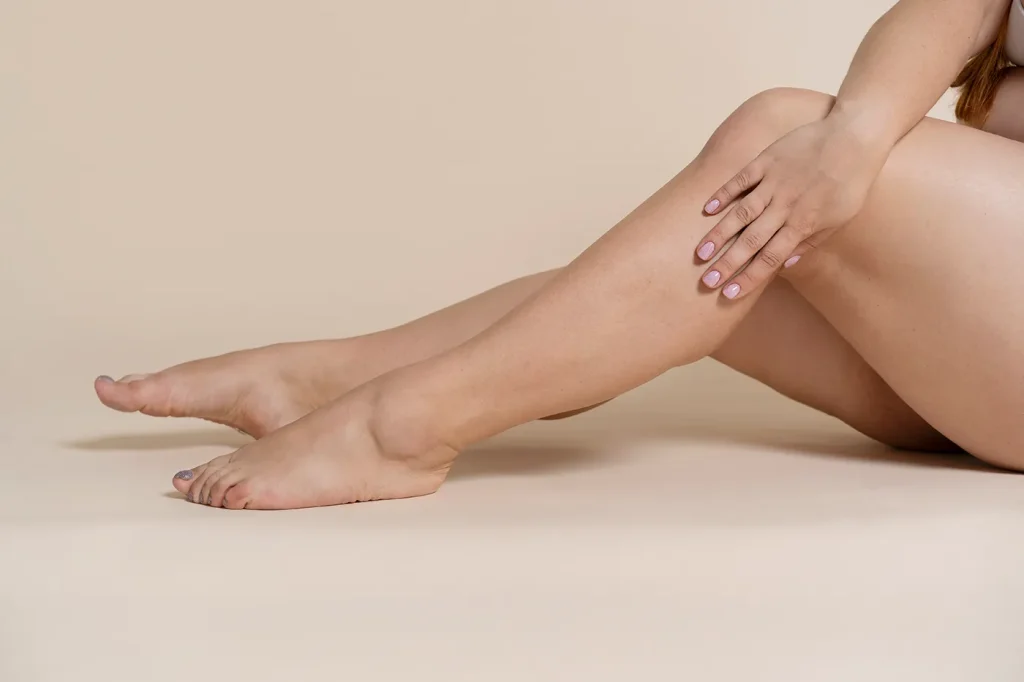
Who Is a Good Candidate for AlloClae® Calf Enhancement?
AlloClae Calf Augmentation Kirkland patients tend to be well suited for treatment when they:
- Have naturally thin calves that do not respond to training
- Want more definition and shape without a dramatic increase in size
- Notice a visible difference between the left and right calf
- Are too lean to supply enough fat for a traditional transfer
- Prefer to avoid a permanent silicone implant
- Have soft-tissue hollows from injury or a prior procedure
- Want to walk out the same day and return to routine within a few days
- Hold realistic expectations about what an injectable can achieve
Patients who are pregnant, have an active infection in the lower leg, or live with circulation or clotting concerns are typically asked to postpone or consider alternatives. Skin thickness, existing muscle shape, and overall leg proportion are reviewed in person before any volume is recommended.
How Is AlloClae® Used for Calf Augmentation?
The AlloClae Calf Contouring process at Northwest Face and Body follows a clear sequence:
- Consultation: Dr. Patel or Dr. Nalluri examines the calves from the front, back, and side while you stand, since muscle shape changes with weight bearing. Symmetry, skin quality, and the areas you want improved are noted, along with your medical history.
- Mapping and volume planning: Placement zones are drawn on the skin, usually following the inner and outer heads of the calf muscle. The total cc count is confirmed, and your final price is set at this stage.
- Numbing: Local anesthetic is infiltrated into the planned areas so you remain comfortable throughout.
- Placement: Through a few small entry points, a blunt cannula delivers the adipose matrix in thin, overlapping layers just above the muscle. Layering rather than depositing a single pocket produces a smoother contour and helps the tissue integrate evenly. The visit typically runs 60 to 90 minutes, depending on the volume and whether one or both legs are treated.
- Final review: Both legs are compared, contours are gently smoothed, and you leave with written aftercare instructions.
No sutures, no drains, and no overnight stay are involved. Most patients walk out comfortably and drive themselves home.

Benefits of AlloClae® for Calf Augmentation
Patients choose Non-Surgical Calf Augmentation Kirkland appointments at Northwest Face and Body because the treatment combines the natural quality of fat with the convenience of an injectable.
No Implant and No Incision Behind the Knee
Calf implants require a surgical pocket, a permanent device, and a scar in the crease behind the knee. AlloClae adds volume through small cannula entry points that fade quickly, and there is no device to shift, rotate, or feel through the skin.
No Liposuction
Fat transfer means a second treated area with its own bruising, swelling, and compression garments. The adipose matrix arrives prepared and ready to place, so the only area that heals is the one you came in to improve. Slim patients who lack spare fat are no longer excluded.
Local Anesthesia in an Office Setting
The full treatment happens in our Kirkland office while you are awake. You avoid the risks, facility fees, and extended recovery that accompany general anesthesia and a surgical suite.
Walking the Same Day
Calf implant surgery typically means days of elevated legs and a slow return to normal walking. After AlloClae Calf Injections, most patients walk out of the office and resume light daily activity within one to three days.
Shaped to Your Anatomy
Implants come in set sizes and shapes. The matrix can be placed in small amounts wherever shape is missing:
- Along the inner calf to balance the leg from the front
- Along the outer calf to widen a narrow profile
- Into one leg only when asymmetry is the main concern
- Over the edges of an existing implant to soften transitions
Natural Feel
Because the material is human adipose tissue, it integrates with your own fat rather than remaining a separate layer. Patients describe the treated calf as soft and indistinguishable from the surrounding tissue, which matters in an area that is touched, flexed, and visible in shorts.
Nothing to Replace Down the Road
There is no shell, so there is no rupture risk, no capsular contracture, no migration, and no scheduled replacement surgery years later.
How Much Does AlloClae® Calf Augmentation Cost?
AlloClae Calf Augmentation Bellevue and Kirkland pricing at Northwest Face and Body is $100 per cc, with a 10 cc minimum per treatment.
Volume | Cost at Northwest Face and Body |
10 cc | $1,000 |
25 cc | $2,500 |
50 cc | $5,000 |
75 cc | $7,500 |
100 cc | $10,000 |
150 cc | $15,000 |
Calf treatment is usually priced per leg, and most patients treat both sides for balance. Correcting a small asymmetry or filling a localized dent may fall toward the lower end of the table, while adding visible fullness to both calves generally requires more. Your surgeon recommends an exact cc count during the mapping step so the total is clear before anything is scheduled. Financing options are available, and you can request an instant quote online.
AlloClae® Calf Augmentation vs Calf Implants vs Fat Transfer
Comparison | AlloClae® | Calf Implants | Fat Transfer with Liposuction |
Material | Processed donor adipose matrix | Solid silicone device | Fat harvested from your own body |
Surgery required | No | Yes | Yes (liposuction) |
Anesthesia | Local | General | General or IV sedation |
Incision | Small cannula entry points | Incision behind the knee | Liposuction incisions plus injection sites |
Donor site | None | None | Abdomen, flanks, or thighs |
Size change | Moderate, targeted | Large | Moderate |
Walking after treatment | Same day | Limited for several days | Limited for several days |
Return to desk work | 1 to 3 days | 1 to 2 weeks | About 1 week |
Long-term maintenance | None device-related | Possible shifting, capsular contracture, or replacement | None device-related |
Best suited for | Definition, asymmetry, refinement, slim patients | Maximum bulk | Moderate enlargement in patients with available fat |
If your goal is a dramatic increase in calf size, implants remain the strongest tool. If your goal is shape, balance, and natural proportion with minimal downtime, AlloClae delivers that without an operating room.
AlloClae® Calf Augmentation Recovery
Recovery after Non-Surgical Calf Augmentation Bellevue and Kirkland treatment is brief, though every patient heals on a slightly different timeline.
The first three days: Expect swelling, firmness, and tenderness in the treated zones, along with possible bruising near the entry points. Over-the-counter pain relief is usually sufficient. Elevating the legs when seated helps swelling settle faster.
Getting back to routine:
- Most patients return to desk work and light daily walking within 24 to 72 hours.
- Avoid running, jumping, cycling, calf raises, and heavy lower-body workouts for about two weeks or until cleared.
- Skip tight compression socks or boots that press directly on the treated area in the first week unless your surgeon advises otherwise.
- Swelling typically settles over three to six weeks, and the final contour becomes visible as the matrix integrates.
A follow-up visit is scheduled to check healing and symmetry once the early swelling has resolved.

Meet Your AlloClae® Calf Augmentation Experts

Dr. Tarak Patel, MD
Dr. Tarak Patel is a double board-certified plastic surgeon at Northwest Face and Body, certified by the American Board of Plastic Surgery. As a West Point graduate, he earned his medical degree from the Uniformed Services University of the Health Sciences, trained in general surgery at Tripler Army Medical Center, and completed plastic and reconstructive surgery residency at UT Health San Antonio before retiring from the U.S. Army in 2018 after 25 years of service. His body contouring practice includes liposuction, fat grafting, and complex revision work, and that reconstructive foundation gives him a precise understanding of how AlloClae® Calf Augmentation works in the lower leg over time. Patients value his direct guidance about what each approach can and cannot achieve.
Dr. Rajshekhar Nalluri
Dr. Rajshekhar Nalluri brings a meticulous eye to body contouring at Northwest Face and Body, with a reputation for thorough planning and for helping patients understand every available option, including when a non-surgical path like AlloClae® makes sense and when a surgical approach would serve them better. His focus on proportion and symmetry suits patients who want a refined, athletic lower leg rather than a dramatic change, and together with Dr. Patel he offers Eastside patients one practice where surgical and non-surgical calf options can be compared side by side.

Ready to Explore Non-Surgical Calf Augmentation on the Eastside?
Tired of calves that never change no matter how hard you train, but not interested in an implant? Northwest Face and Body is one of the few practices in the region offering AlloClae Calf Augmentation in Kirkland for the lower leg, performed by board-certified plastic surgeons who understand the full range of calf procedures. The plan you receive is based on your anatomy, not on the one tool a practice happens to have.
Call (425) 576-1700 or request a consultation online to find out whether AlloClae Calf Augmentation in Kirkland or Bellevue is right for you.
Frequently Asked Questions
Is AlloClae® the same as a calf fat transfer?
Not exactly. A traditional fat transfer uses your own fat, which must be removed by liposuction first. AlloClae uses screened and processed donor adipose tissue, so the harvest step is eliminated. The end result feels similar because the material is still a natural fat matrix.
How much volume will my calves need?
The minimum is 10 cc. Filling a localized dent or correcting a small asymmetry often falls on the lower end. Adding visible fullness to both calves generally requires more, and many patients treat each leg separately for balance. A precise number is set during your evaluation.
Can I walk right after treatment?
Yes. Most patients walk out of the office and go about light daily activity within a day or two. Strenuous lower-body exercise waits about two weeks.
Will the result look natural when I flex?
The matrix is placed above the muscle in thin layers and integrates with your own tissue, so it moves with the calf rather than sitting as a rigid shape. Natural movement is one of the main reasons patients choose this over an implant.
How long do results last?
AlloClae is designed to be long-lasting because surrounding tissue grows into the matrix. Some early settling is normal as swelling resolves. Longevity varies with age, weight stability, and activity level, and your surgeon can discuss whether a small touch-up might be useful later.
Does the treatment hurt?
Local anesthetic is used before placement, and most patients describe pressure rather than pain. Mild soreness and a tight feeling in the calves for a few days afterward is typical.
Can I have AlloClae® if I already have calf implants?
Yes. Softening visible implant edges or filling gaps around an existing device is a common reason patients choose this treatment.
Is AlloClae® different from Sculptra or hyaluronic acid fillers?
Sculptra is a synthetic biostimulant, and hyaluronic acid is a gel. AlloClae is actual human adipose tissue with its structure preserved, so it integrates into the calf and feels like your own fat rather than a product sitting within it.
Is AlloClae® Safe for Calf Augmentation?
According to the manufacturer, AlloClae® is marketed as an HCT/P (Human Cell and Tissue Product) and meets the applicable requirements laid out in the FDA’s HCT/P regulations. Donor tissue undergoes screening and testing for transmissible diseases as part of the processing protocol, and the finished matrix contains no living cells, which keeps rejection risk very low.