
Pico Laser Melasma Treatment in Kirkland and Bellevue, WA
Procedure Time
2 Hrs
Recovery Time
1 week
Tracheal Shave
Starts at
$xxx
Melasma ranks among the most difficult pigmentation conditions to treat. Creams fade it slowly, heat-based lasers often make it darker, and sun exposure brings it right back. Pico laser melasma treatment in Kirkland and Bellevue offers a safer path forward. Picosecond technology breaks up pigment with ultra-short energy pulses instead of heat, which lowers the risk of flare-ups and makes the procedure suitable for a wider range of skin tones.
Northwest Face & Body provides Pico laser treatment for melasma in Kirkland and Bellevue for patients across the Eastside who want visible, lasting improvement in brown and gray-brown facial patches. Every plan begins with a skin assessment so the laser settings, session count, and at-home routine match the pigment depth and skin type of each patient.
Book a Pico Laser Melasma Consultation at Northwest Face & Body
What Is Melasma?
Melasma is a chronic pigmentation disorder that appears as symmetrical tan, brown, or gray-brown patches on the face. The most common areas are the cheeks, forehead, upper lip, bridge of the nose, and chin. It affects women far more often than men and typically develops between the ages of 20 and 50.
Unlike sunspots or post-acne marks, melasma is driven by overactive melanocytes, the cells responsible for producing pigment. Hormones, UV light, visible light, and heat all stimulate these cells, which explains why melasma can fade during a Pacific Northwest winter and return every summer.
What Causes Melasma?
- Hormonal changes from pregnancy, birth control pills, hormone replacement therapy, or menopause
- Sun exposure, including reflected UV from Lake Washington and overcast days that still deliver UVA
- Heat and visible light from stoves, saunas, hot yoga, and screens
- Genetics, particularly a family history of melasma or naturally deeper skin tones
- Skin irritation caused by harsh products or aggressive treatments
Epidermal, Dermal, and Mixed Melasma
Melasma pigment can sit in the epidermis (surface layer), the dermis (deeper layer), or both. Epidermal melasma responds reasonably well to topicals and peels. Dermal and mixed melasma lie below the reach of most creams, which is where picosecond laser for melasma makes a measurable difference.
Why Pico Laser Is a Better Fit for Melasma Than Other Traditional Lasers
Traditional lasers and IPL treatments use heat to target melanin, which can irritate melasma-prone skin and potentially trigger rebound pigmentation. Pico laser uses ultra-short picosecond pulses to break pigment into smaller particles through photoacoustic energy rather than relying primarily on heat.
This approach offers several potential benefits:
Less heat exposure
Minimizes thermal damage to surrounding skin.
Reduced pigmentation risk
Lower heat exposure may reduce the likelihood of post-inflammatory hyperpigmentation.
Targets deeper pigment
Helps address epidermal, dermal, and mixed pigmentation.
Suitable for diverse skin tones
With appropriate wavelengths and conservative settings, treatment can be tailored to different skin types.
Minimal downtime
Most patients experience mild redness that typically subsides within a few hours.
Unlike treatments that primarily address surface discoloration, pico laser treatment for melasma can target deeper pigment while preserving the surrounding skin. Conservative settings and proper aftercare remain essential to minimize irritation and recurrence.
How Pico Laser Treatment for Melasma Works
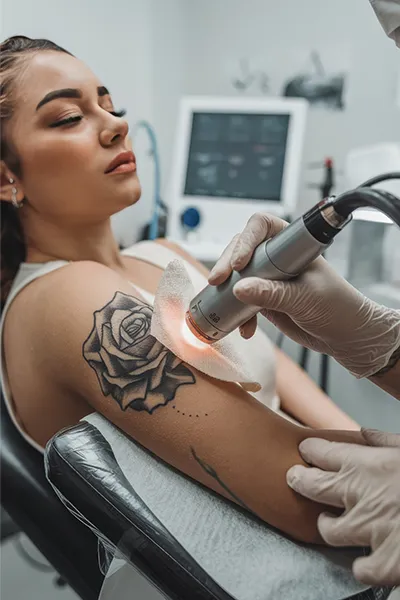
Pico laser treatment for melasma uses ultra-short energy pulses to target unwanted pigmentation while minimizing heat exposure to surrounding skin.
- Pigment fragmentation: Ultra-short pulses break melanin clusters into particles small enough for the lymphatic system to clear.
- Low-energy settings: Melasma is treated with gentler fluence than tattoo or sunspot removal to avoid overstimulating melanocytes.
- Collagen response: The laser creates tiny pressure waves in the dermis that trigger new collagen and elastin, improving texture and tone at the same time.
- Gradual clearing: Pigment fades over several weeks after each session as the body removes the fragmented particles.
What to Expect From Pico Laser Melasma Treatment in Kirkland or Bellevue
Consultation
The provider evaluates skin type, pigment depth, and medical history to determine the appropriate treatment settings and number of sessions.
Treatment Session
Each session takes approximately 20 to 30 minutes. Patients may feel a mild snapping or tingling sensation as the laser targets pigmentation. Numbing cream is available if needed, followed by a cooling step to soothe the skin.
Aftercare
Mild redness or warmth may occur but typically resolves within a few hours. Patients should avoid direct sun exposure for 48 hours, limit heat exposure, and apply a gentle moisturizer and broad-spectrum SPF 50 daily. Retinoids, acids, and scrubs should be paused as recommended by the provider.
Results Timeline
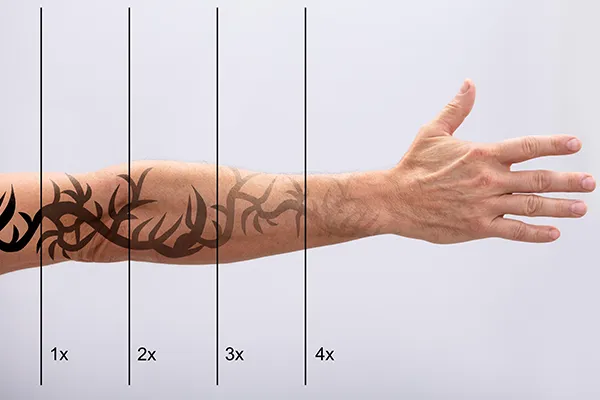
Initial brightening may appear within one to two weeks. Most patients require 4 to 6 sessions spaced 4 to 6 weeks apart for noticeable improvement. Pigmentation continues to fade over the following weeks as the body clears fragmented pigment particles.
How Many Pico Laser Sessions Does Melasma Need?
Most melasma cases require 4 to 6 sessions for significant improvement. Deep or long-standing melasma may need additional visits, while lighter epidermal melasma may respond in fewer. Because melasma is a chronic condition rather than a one-time blemish, a maintenance session every 3 to 6 months helps keep results stable through the summer months.
Combining Pico Laser With Medical-Grade Skincare
Pico laser melasma in Kirkland clears existing pigment. Skincare prevents new pigment from forming. The strongest outcomes come from pairing both. The provider may recommend:
- Tranexamic acid (topical or oral) to calm melanocyte activity
- Hydroquinone, azelaic acid, or kojic acid for short-term brightening cycles
- Niacinamide and vitamin C for daily antioxidant support
- Tinted mineral SPF 50 with iron oxides to block visible light, not only UV
This combined approach lowers recurrence rates and extends the time between maintenance visits.

Who Is a Good Candidate for Pico Laser Melasma Treatment?
Good candidates for pico laser treatment for melasma generally:
- Have brown or gray-brown facial patches that have not responded to creams or peels
- Experience rebound darkening after IPL or other heat-based treatments
- Have a medium, olive, or deep skin tone and need a laser that is safe for the complexion
- Commit to daily sun protection and a maintenance plan
- Are not pregnant or breastfeeding
- Have not used oral isotretinoin in the past six months
Patients with active skin infections, uncontrolled hormonal conditions, or recent sunburn in the treatment area should wait until the skin has stabilized. A consultation confirms whether Pico laser is the right choice or whether a combination approach will produce better results.
Serving Melasma Patients Across the Eastside
Northwest Face & Body is located in Kirkland and treats patients from Bellevue, Redmond, Bothell, Woodinville, Sammamish, Mercer Island, and the greater Seattle area. Under the direction of board-certified plastic surgeons, licensed aestheticians at the practice offer Pico laser melasma in Kirkland and Bellevue for patients who want a heat-free approach to pigment clearing.
The Kirkland office sits minutes from downtown Bellevue, making Pico laser melasma in Bellevue a short drive for patients in Downtown, Crossroads, Factoria, and Eastgate.
Why Choose Northwest Face & Body for Pico Laser Melasma Treatment?
Northwest Face & Body offers personalized melasma treatments based on each patient’s skin type, pigmentation depth, and treatment goals.
Experienced Medical Team
The procedure is offered by licensed master aestheticians working under the direction of board-certified plastic surgeons.
Customized Treatment Plans
Laser settings and session recommendations are tailored to individual skin characteristics and pigmentation concerns.
Personalized Skincare Guidance
Patients receive recommendations for pigmentation management, skin barrier support, and sun protection.
Convenient Eastside Location
Located in Kirkland, the practice serves patients from Bellevue, Redmond, Bothell, Woodinville, and surrounding communities.
Schedule Pico Laser Melasma Treatment in Kirkland or Bellevue
Melasma does not improve on its own, and heat-based treatments frequently push it in the wrong direction. Northwest Face & Body offers Pico laser treatment for melasma in Bellevue and Kirkland, targeting pigment with a heat-free approach designed for a range of skin tones.
Call Northwest Face & Body or complete the online booking form to book a consultation and take the first step toward more even-looking skin.
Frequently Asked Questions
Does Pico laser get rid of melasma permanently?
No laser cures melasma permanently because the condition is driven by hormones and light exposure. Pico laser clears existing pigment and, when combined with strict sun protection and maintenance skincare, keeps the skin clear for extended periods. Periodic touch-up sessions manage recurrence.
Is Pico laser safe for melasma on dark skin?
Yes. The 1064 nm picosecond wavelength is considered one of the safest laser options for melasma in Fitzpatrick IV through VI skin because it delivers minimal heat and bypasses surface melanin. Conservative settings and test spots are used for deeper skin tones.
Can Pico laser make melasma worse?
When performed with aggressive settings or on patients who skip sun protection, any laser can trigger post-inflammatory hyperpigmentation. Pico laser carries the lowest risk of this outcome among laser options because it relies on pressure rather than heat. Experienced providers use low fluence and larger spot sizes specifically to protect melasma-prone skin.
How much does Pico laser melasma treatment cost in Kirkland and Bellevue?
Pricing depends on the size of the treatment area and the number of sessions required. Package pricing is available for the recommended 4 to 6 session series. Exact figures are provided during the consultation after the skin assessment.
Is there downtime after Pico laser for melasma?
Downtime is minimal. Mild redness typically resolves within a few hours, and most patients return to work the same day. Makeup can be applied the following morning.
How soon after Pico laser can melasma results be seen?
Initial brightening is often visible within one to two weeks of the first session. Noticeable fading of melasma patches builds progressively across the treatment series, with the clearest results appearing four to eight weeks after the final session.